
If you have started exploring the real estate market in Fort Worth, toured an open house in Aledo, or requested details about acreage out in Parker County, you have likely run into a mandatory document that causes sudden hesitation. An agent hands you a form filled with legal descriptions and text blocks, asking for a signature just to continue talking.
For many everyday DFW consumers, this creates immediate signature friction. You might wonder: Am I locked into an exclusive contract? Did I just hire this person? What does this document mean for my wallet?
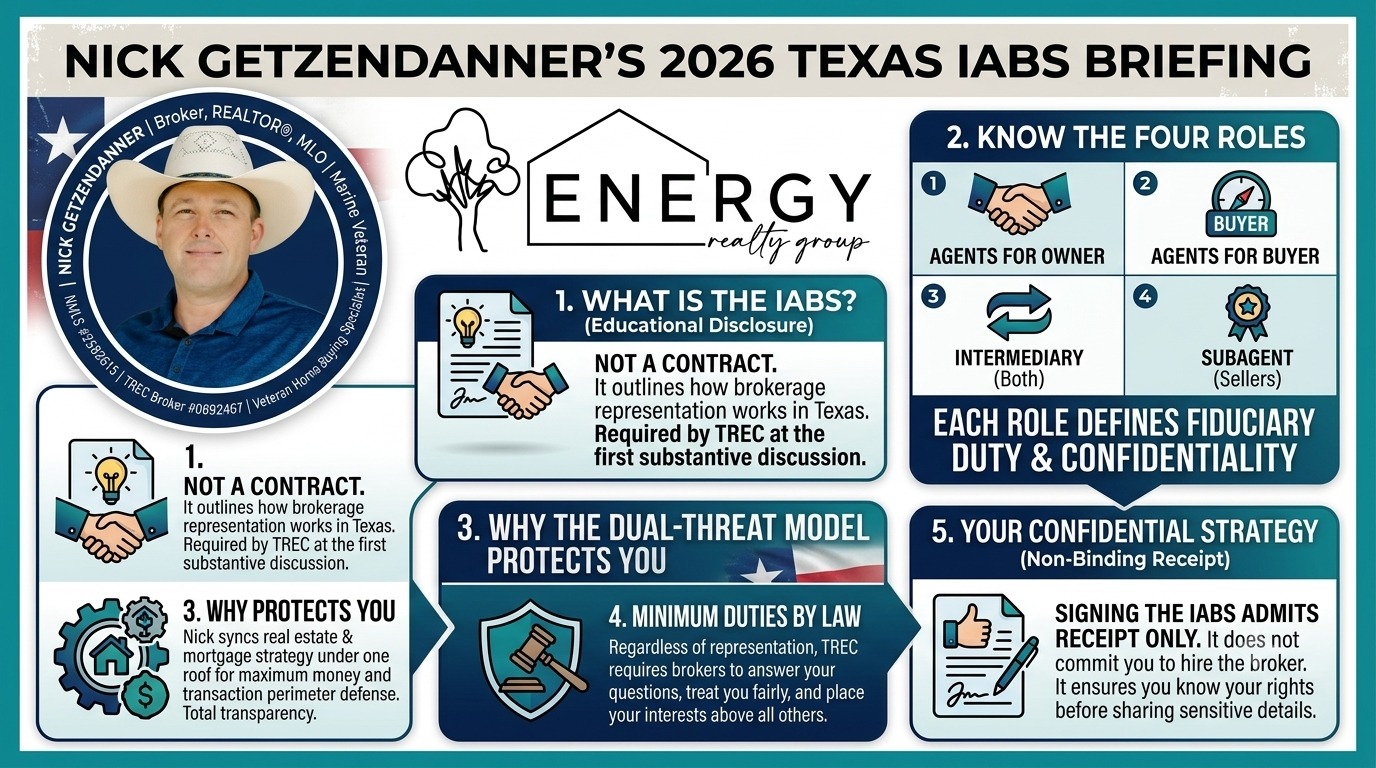
Let’s clear up the confusion immediately. The document is the Texas Real Estate Commission (TREC) Information About Brokerage Services form, commonly known as the IABS. It is not a trap, it is not an exclusive agreement, and it is entirely non-binding. Here is why this mandatory disclosure protects you and how to read it like a seasoned pro.
1. What the IABS Actually Is (And What It Isn’t)
The IABS is purely a statutory consumer disclosure form required by Texas law. It is designed to act as an educational tool to ensure the public understands how agency representation works in the Lone Star State before discussing any specific property details or financial parameters.
- It Is NOT a Contract: Signing or receiving the IABS does not obligate you to work with the agent who provided it. It does not cost you a single dime, and it does not establish a formal broker-client relationship.
- It IS an Agency Map: Think of the IABS as a conceptual rulebook that spells out the specific responsibilities a brokerage owes to a consumer depending on which seat they occupy at the transaction table.
2. The Four Roles Outlined on the Form
The IABS clearly defines the four structural capacities in which a Texas real estate license holder can operate. Understanding these roles keeps you protected whether you are buying a home or selling one:
1. As Agent for Owner (Seller’s Agent)
The broker becomes the property owner’s legal representative, usually through a formal listing agreement. The agent must inform the owner of any material information about the property or transaction known by the agent, including information disclosed to the agent by the buyer or buyer’s agent.
2. As Agent for Buyer/Tenant
The broker becomes the buyer’s legal representative, typically by executing a written buyer representation agreement. The agent must inform the buyer of any material information about the property or transaction known by the agent, including information disclosed to the agent by the seller or listing broker.
3. As Agent for Both – Intermediary
To act as an intermediary between the parties, the broker must first obtain the written agreement of each party to the transaction. The written agreement must state who will pay the broker and, in conspicuous bold or underlined print, set forth the broker’s obligations as an intermediary. A broker who acts as an intermediary:
- Must treat all parties to the transaction impartially and fairly.
- May, with the parties’ written consent, appoint a different license holder associated with the broker to each party (owner and buyer) to communicate with, provide opinions and advice to, and carry out the instructions of each party to the transaction.
- Must not, unless specifically authorized in writing to do so by the party, disclose that the owner will accept a price less than the written asking price, that the buyer will pay a price greater than the price submitted in a written offer, or any confidential information unless required to do so by law.
4. As a Subagent
A license holder acts as a subagent when aiding a buyer in a transaction without an agreement to represent the buyer. A subagent can assist the buyer but does not represent the buyer and must place the interests of the owner first.
3. Why the Initial “Signature” Matters
At the bottom of the form, you will find a spot labeled “Buyer/Seller/Landlord/Tenant Initials” and a date line.
When an agent asks you to initial this form, they are not asking you to commit to them. They are simply documenting that they fulfilled their legal obligation under the Texas Real Estate License Act to provide you with this consumer information at your first substantive dialogue regarding a specific piece of real property.
Initialing the IABS protects the broker’s compliance record while verifying that you have been educated on your rights as a consumer. It gives you the green light to speak freely, knowing exactly where the boundaries of representation lie.
4. The Dual-Threat Broker-MLO Shield Advantage
While the IABS outlines standard brokerage functions, navigating the market requires more than checking compliance boxes. A traditional agent reviews the IABS, checks a box, and moves on.
As both your Texas Real Estate Broker and an active Mortgage Loan Officer (MLO), I approach the real estate relationship with a dual layer of protection. Long before we sign a binding representation agreement, we look at the big picture together—analyzing how target local property taxes in Parker and Tarrant counties impact your total lending qualification and evaluating exact loan structures alongside physical inventory strategies. This comprehensive oversight ensures that when you do decide to formalize a partnership, your equity is fully protected from underwriting blindspots right from the initial handshake.
Ready to Navigate the DFW Market with Total Confidence?
Let’s cut through the standard industry paperwork and design a tailored buying or selling plan. Secure your custom Net Equity Analysis or tailored Buying Strategy session today.
Let’s execute the mission. I’ve Got Your Six.



Join The Discussion