There is nothing quite like owning a piece of the Lone Star State—especially when it means securing a vast home site in East Parker County, custom building out past Aledo, or establishing a multi-parcel homestead near Weatherford. But buying or selling rural land in Texas involves unique environmental liabilities that urban properties never encounter. Chief among them is a critical resource: water.
The Texas Real Estate Commission (TREC) has introduced a mandatory specialized disclosure framework that every DFW land buyer and seller must understand: the TREC Form 61-0, Notice of Water Level Fluctuations and Rural Properties.
This isn’t just another layer of legal compliance. It is a vital authority builder designed to protect transaction structures from water well volatility, regional groundwater management restrictions, and hidden split-deed liabilities. Let’s look beneath the topsoil to see exactly how this notice impacts your next real estate move.
1. Demystifying the TREC 61-0 Framework
Unlike standard municipal properties connected to a city grid, rural acreage compounds depend heavily on private water infrastructures, local aquifers, or adjoining surface impoundments. The brand-new TREC 61-0 form acts as an explicit legal warning regarding two distinct geographical realities:
- Surface Water Fluctuations: If an acreage compound borders an impoundment, reservoir, or water storage body managed by the state or an authority, the water line can shift dramatically due to drought, seasonal allocations, or flood-control operations. The notice legally insulates sellers by ensuring buyers recognize that a picturesque waterfront view in the spring can alter by the dry Texas August.
- Subsurface Groundwater Realities: The disclosure formalizes notice that rural properties utilizing private water wells are bound by distinct regional parameters that govern flow rates, maximum drawdowns, and equipment depth requirements.
2. The Rules of the Underground: Groundwater Conservation Districts
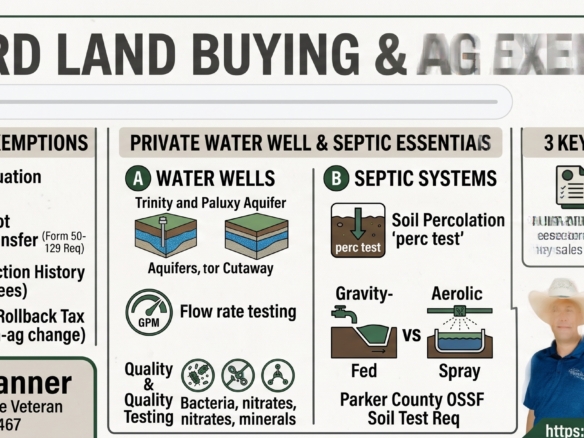
If you are looking at acreage in Parker County, Wise County, or Hood County, your well water isn’t completely deregulated. Large sections of our local sub-markets sit squarely within regional Groundwater Conservation Districts (GCDs), such as the Upper Trinity Groundwater Conservation District.
These entities hold the statutory authority to regulate the spacing of new wells, mandate production permits for large-volume properties, and track drawdown limitations to preserve the local aquifer system.
When navigating the TREC 61-0 space, you must investigate:
- Well Registration Records: Is the existing domestic well properly registered with the local GCD? Unregistered wells can create sudden compliance friction at the title desk.
- GPM Flow Integrity: The document serves as a reminder to conduct comprehensive testing of Gallons Per Minute (GPM) flow capabilities and pump storage longevity before waiving your inspection contingencies.
3. The Trap of Multi-Parcel and Split-Deed Acreage
Rural real estate in the DFW metro-plex often involves purchasing multi-parcel boundaries or adjacent tracks assembled over decades. Here is where many standard real estate transactions break apart:
A seller might assume a water well located on “Parcel A” legally and perpetually services the new construction home being erected on “Parcel B.” However, if the parcels are split during the transaction or sold via separate legal descriptions, you run directly into a severe cross-parcel utility trap. Without formal utility easements, shared-well maintenance covenants, and clear title policy riders executed concurrently, the buyer could inherit a home without legal access to water.
4. The Connected Broker-MLO Shield: Protecting Your Rural Investment
A traditional real estate agent reviews the new TREC 61-0 form, hands it over for signatures, and leaves the systemic research up to you. But rural land transactions require a dual-threat approach.
As both your Texas Real Estate Broker and active Mortgage Loan Officer (MLO), I look at rural acreage through a highly specialized lens. Before you execute a contract or commit earnest money, we audit the property’s operational layout against strict lending parameters. VA construction guidelines, traditional agricultural exemptions, and conventional land appraisal frameworks require explicit proof of continuous, potable water delivery. By looking at well infrastructure and GCD boundaries from both a property protection standpoint and an underwriting perspective, we make sure your capital is shielded from sudden loan denials or post-closing operational surprises.
Ready to Buy or Sell DFW Acreage Safely?
Do not guess when it comes to rural disclosures or water well integrity. Secure your custom Net Equity Analysis or tailored Rural Property Selling Strategy today.
Let’s execute the mission. I’ve Got Your Six.


Join The Discussion