The home inspection phase is often the most stressful stretch of any Texas real estate transaction. Whether you are a buyer navigating your option period or a seller preparing your home for market scrutiny, understanding what inspectors look for in North Texas can mean the difference between a smooth closing and a collapsed contract.
In DFW, unique environmental factors—such as expansive clay soils, severe weather events, and aging municipal or rural infrastructure—make thorough inspections non-negotiable. Knowing how to prioritize inspection findings helps both parties negotiate fairly and keep the deal on track.
Top DFW Inspection Red Flags to Watch For
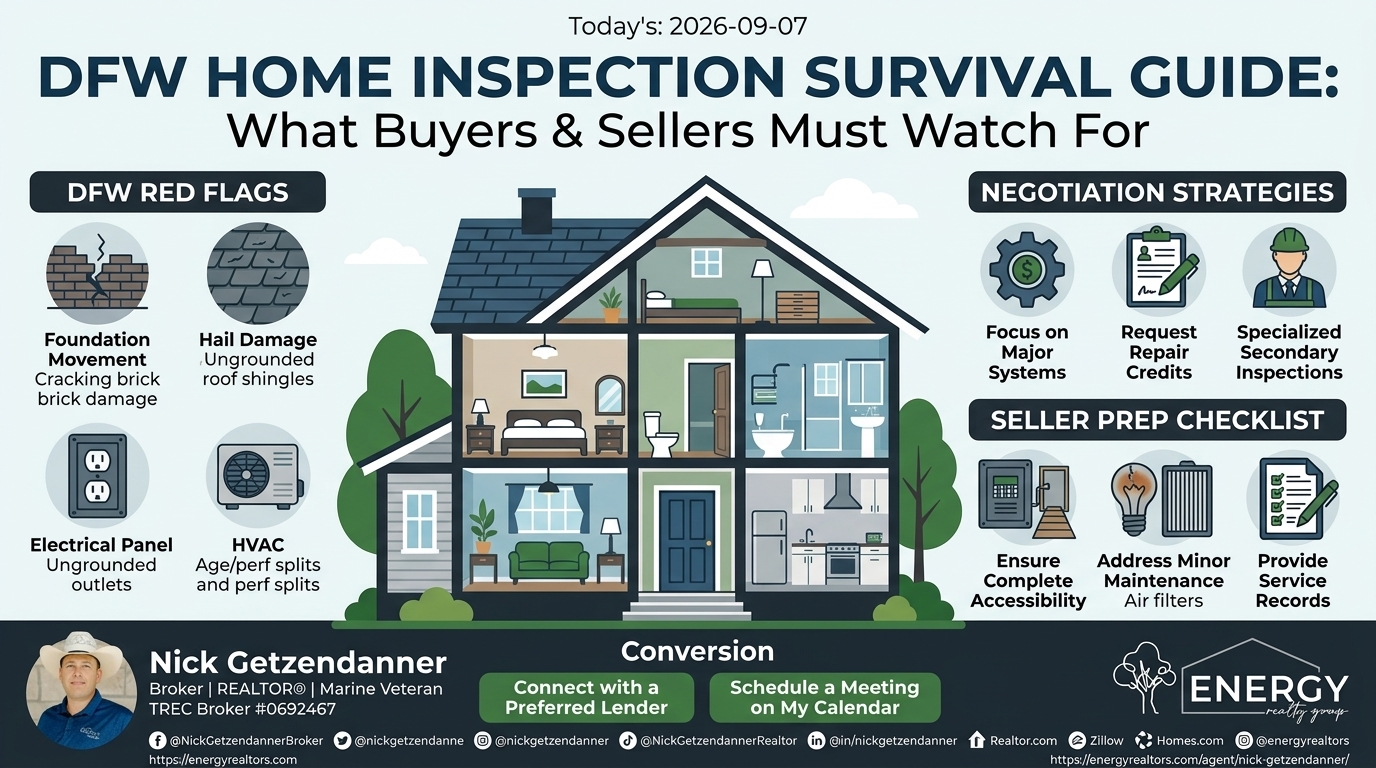
Texas Real Estate Commission (TREC) licensed inspectors evaluate structural integrity, mechanical systems, and safety features. Across Fort Worth, Parker County, and surrounding areas, these are the primary big-ticket items that deserve immediate attention:
- Foundation Movement & Clay Soil Issues: Highly expansive North Texas clay shifts dramatically between wet and dry seasons. Look for exterior brick cracking, sticking interior doors, and unlevel flooring.
- Roofing & Hail Damage: DFW spring storms take a toll on roof shingles. Inspectors evaluate missing shingles, granule loss, flashing leaks, and hail impact patterns.
- HVAC Performance & Age: Texas summers place massive demands on AC units. System age, differential temperature splits, and ductwork condition are key evaluation areas.
- Electrical Panel Safety: Outdated panels (such as Federal Pacific or Zinsco), ungrounded outlets, or lack of GFCI protection in kitchens and bathrooms represent major safety flags.
- Plumbing Leaks & Sewer Scopes: Galvanized piping in older homes or cast-iron sewer lines require close examination, especially in mature Fort Worth neighborhoods.
Repair Negotiation Tactics During the Option Period
The Texas standard purchase contract provides an agreed-upon Option Period giving buyers the unrestricted right to inspect and negotiate. Here is how to handle findings strategically:
1. Focus on Major Systems & Safety Hazards
Distinguish between critical structural/safety defects and minor cosmetic wear. Sellers are far more willing to address active leaks or electrical hazards than scuffed baseboards.
2. Request Repair Credits vs. Seller Repairs
In many cases, negotiating a financial credit toward closing costs or a price reduction is preferable to having the seller rush repairs before closing with contractor work that may lack warranties.
3. Utilize Specialized Secondary Inspections
If general inspection report flags potential issues, order specialized evaluations—such as a structural engineer’s report, HVAC technician diagnostic, or termite/WDI (Wood Destroying Insect) inspection—before your option period ends.
Pre-Inspection Checklist for DFW Home Sellers
- Ensure Complete Accessibility: Clear access to electrical panels, attic access hatches, water heaters, and HVAC units so the inspector does not flag inaccessible areas.
- Address Known Minor Maintenance: Replace dirty air filters, replace burnt-out lightbulbs, clear gutter debris, and fix leaky faucets before the inspection takes place.
- Provide Service Records: Leave documentation for recent HVAC tune-ups, roof replacements, or foundation work with transferrable warranties on the kitchen counter for review.
Navigating home inspections requires experienced guidance and grounded negotiation strategies. Whether you are buying or selling in Aledo, Fort Worth, or Weatherford, having clear eyes during the option period protects your wallet.
Ready to structure your buying or selling strategy? Start Your Home Buyer & Seller Strategy Session with our team today.
As a Marine Veteran and local Texas Broker, I provide straightforward advice and aggressive representation throughout your entire transaction. Schedule a Meeting on My Calendar to discuss your real estate plans!


Join The Discussion