
When searching for a home across Tarrant, Parker, and Hood Counties, one of the most fundamental decisions buyers face is choosing between a planned HOA community and a non-HOA or minimal-restriction property. From master-planned developments in Aledo to open acreage in Weatherford and Granbury, each setup brings distinct operational rules, financial obligations, and lifestyle dynamics.
Understanding how homeowners associations operate—and what non-HOA ownership truly entails in Texas—ensures you choose a property aligned with your long-term plans, budget, and lifestyle goals.
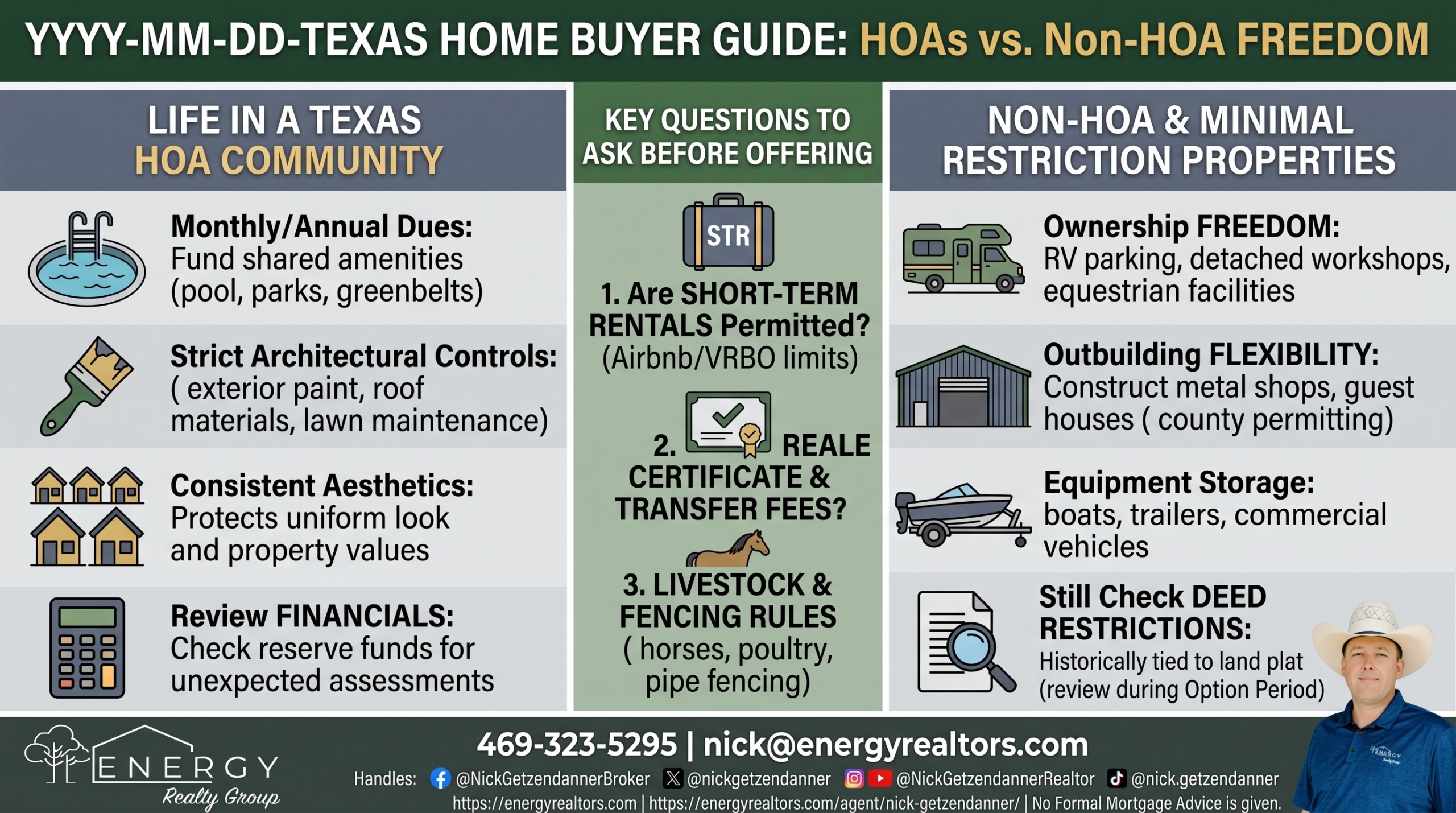
1. Life in a DFW HOA Community: Amenities & Standards
Homeowners Associations (HOAs) are private governing bodies established in residential subdivisions to enforce community rules, manage shared amenities, and maintain consistent neighborhood aesthetics. In growth corridors like Aledo and West Fort Worth, HOAs are common in master-planned communities.
- Shared Amenities & Infrastructure: Monthly or annual dues fund community swimming pools, fitness centers, private parks, greenbelts, and neighborhood security features.
- Property Value Consistency: Strict Architectural Control Committee (ACC) guidelines regulate exterior paint colors, roof materials, lawn maintenance, and vehicle parking, protecting visual uniformity across the neighborhood.
- Dues & Reserve Funds: HOA dues can range from $300 annually to over $200 per month depending on amenities. Reviewing the association’s financial health and reserve funds before closing prevents unexpected special assessments.
2. Non-HOA & Minimal Restriction Properties: Freedom & Flexibility
For buyers seeking space for livestock, RV parking, detached workshops, or barndominiums, non-HOA properties across Parker, Hood, and Wise Counties offer maximum ownership freedom:
Outbuilding & Workshop Flexibility
Without an ACC approval process, property owners can construct detached metal shops, guest houses, or equestrian facilities in accordance with standard county building permits and setback requirements.
Parking & Equipment Storage
Store boats, travel trailers, utility trailers, or commercial vehicles directly on your property without facing HOA fines or parking enforcement notices.
Deed Restrictions Still Apply
Even without an active HOA board or monthly fees, many rural Texas subdivisions still have historic deed restrictions tied to the land plat. Always have your title company and real estate broker review deed restrictions during the Option Period.
3. Key Questions to Ask Before Making an Offer
- Are Short-Term Rentals Permitted? If you plan to generate rental income via Airbnb or VRBO, verify whether community bylaws or municipal ordinances restrict lease terms to 12 months minimum.
- What Are the Transfer & Resale Certificate Fees? Texas law requires sellers to provide HOA Resale Certificates, but buyers should account for title transfer fees and administrative charges at closing.
- What Are the Livestock & Fencing Rules? On semi-rural acreage, confirm whether poultry, horses, or perimeter pipe fencing comply with county or subdivision covenants.
Navigating deed restrictions, HOA bylaws, and property selection requires experienced local guidance before making an offer. Thinking about buying or selling in Parker, Tarrant, or Hood County?
Ready to evaluate neighborhood guidelines or start your home search? Start Your Home Buyer Strategy Session with our team today.
As a Marine Veteran and local Texas Broker, I provide straight-forward advice to help you find the right property for your lifestyle. Schedule a Meeting on My Calendar to map out your real estate goals!

Join The Discussion