1. The Core Policy Shift: Trained Service Animals vs. Untrained ESAs
Under HUD’s updated enforcement posture, federal regulators are drawing a strict distinction based on task training:
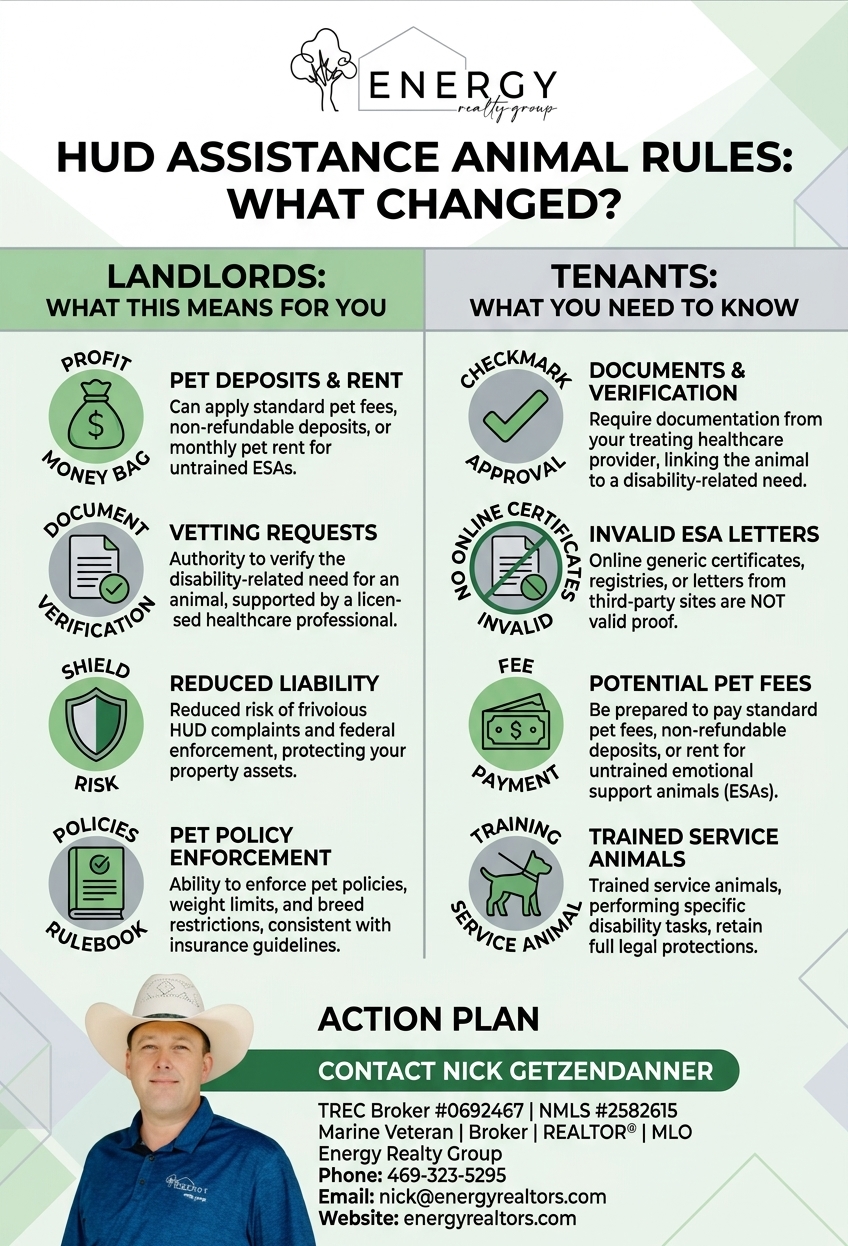
- Trained Service Animals Remain Fully Protected: Animals individually trained to perform specific tasks or work related to a disability—such as seizure response, psychiatric task interruption, or mobility assistance—retain full federal protection. Housing providers must continue to grant reasonable accommodation requests, including waiving pet fees, pet rent, and breed/weight restrictions.
- Untrained ESAs Lose Automatic Protections: HUD no longer focuses federal enforcement resources on investigating reasonable accommodation complaints involving animals that lack individual task training. Housing providers are no longer expected by federal enforcement to automatically grant fee waivers or waive pet policies for untrained ESAs.
- Rejection of Online Certificates: HUD reaffirmed that generic letters, downloadable certificates, or registry numbers purchased online from third-party websites without an established, ongoing relationship with a treating healthcare professional do not satisfy verification standards.
2. Why It’s Great News for DFW Landlords & Property Managers
If you own residential rental property in Tarrant, Parker, or Hood County, this policy update offers significant operational benefits:
- Dramatically Reduced Liability: Landlords previously faced substantial exposure to federal fair housing complaints when questioning questionable online ESA documentation. The threat of HUD enforcement on untrained ESA denials has been drastically reduced.
- Enhanced Asset & Insurance Protection: Property owners can better enforce lease terms, weight limits, and standard pet deposits on untrained animals. This helps offset physical property damage risks and prevents conflicts with insurance policy breed exclusions.
- Clear Vetting Framework: Landlords can legally require documentation verifying that an animal has been trained for specific disability-related tasks, or apply standard lease pet policies when task training is absent.
3. Why It’s Challenging for Tenants
For DFW renters who rely on companion animals for emotional well-being, the requirements to receive accommodation exemptions have heightened significantly:
- Standard Pet Fees May Apply: Tenants with untrained ESAs should expect landlords to enforce standard lease terms, including non-refundable pet fees, monthly pet rent, and security deposits.
- Online ESA Letters Are Invalid: Quick-fix ESA certificates purchased off internet mills carry no weight under modern enforcement guidelines. Documentation must come directly from a treating physician, therapist, or licensed medical professional.
- Training Is the New Benchmark: To qualify for full fee waivers and policy exceptions, the animal generally must be individually trained to execute specific disability-related work or tasks.
4. Crucial Legal Context & Action Plan
Important Legal Note: HUD’s guidance represents an internal federal enforcement policy update, not a statutory rewrite of the Fair Housing Act by Congress. Tenants retain the right to file private lawsuits in court, and Texas state fair housing law operates independently. Existing active lease agreements cannot be altered mid-term without proper legal grounds. Always consult a qualified Texas real estate attorney before modifying property policies.
Action Items for Texas Landlords:
- Audit rental application workflows and pet screening procedures.
- Consult legal counsel to update lease agreements for upcoming renewals.
- Ensure property rules align with your landlord hazard insurance guidelines.
Action Items for DFW Tenants:
- Obtain accommodation letters directly from an established, treating medical provider.
- Disclose assistance animals early during the lease application process.
- Be prepared to distinguish between untrained emotional support animals and task-trained service animals.
Navigating real estate regulations, property investments, and home financing across Fort Worth, Aledo, and the surrounding DFW market requires local expertise[cite: 1, 2]. Whether you are buying an investment property, selling your home, or seeking mortgage approval, Energy Realty Group is here to help[cite: 1, 2].
Ready to discuss your real estate or financing goals? Book a Consultation with Nick Getzendanner today, or Start Your Pre-Approval Application to get started!


Join The Discussion