
Before you dive into the coursework, it’s important to understand who holds the keys to the kingdom. Real estate licenses in the Lone Star State are exclusively regulated, issued, and managed by the Texas Real Estate Commission (TREC). Established to protect consumers and ensure high professional standards, TREC oversees everything from background checks and education approval to regular real estate practice compliance across Texas. Any official application you submit will go straight through their portal.
Let’s clear the air right out of the gate: if you’re looking to get into real estate because you saw a reality TV star cash a six-figure check while driving a shiny European sports car, you might want to hit the brakes. The industry is highly rewarding, but let’s be completely honest—it is not easy money.
Building a successful real estate career in the Fort Worth, Aledo, and greater DFW markets takes grit. You are dealing with complex contracts, navigating high-stakes negotiations, working odd hours, and occasionally answering client calls at the dinner table. You are essentially always on call. However, if you genuinely love working with people and want to help families achieve major milestones—like buying a ranch in Parker County or a first home in Cowtown—this career is incredibly profitable and profoundly fulfilling.
1. The Baseline State Licensing Requirements
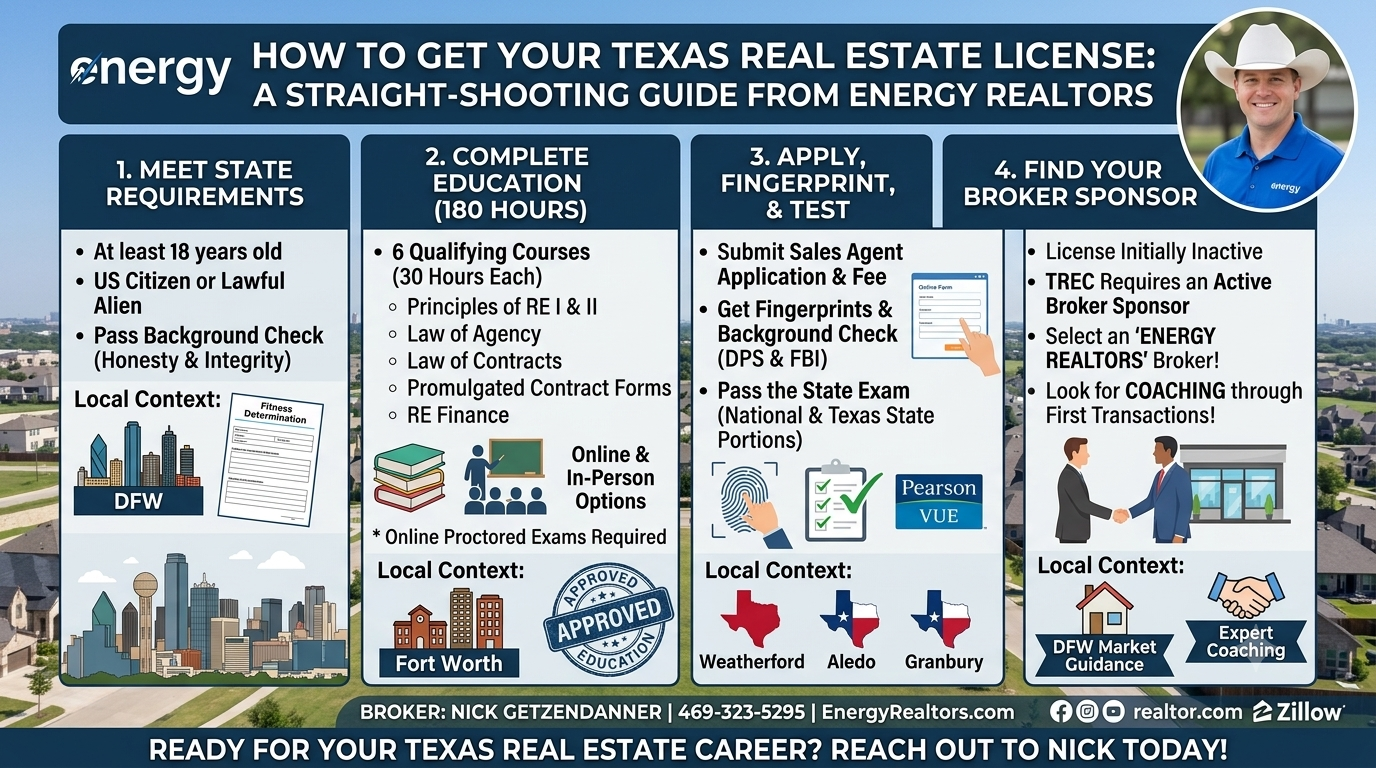
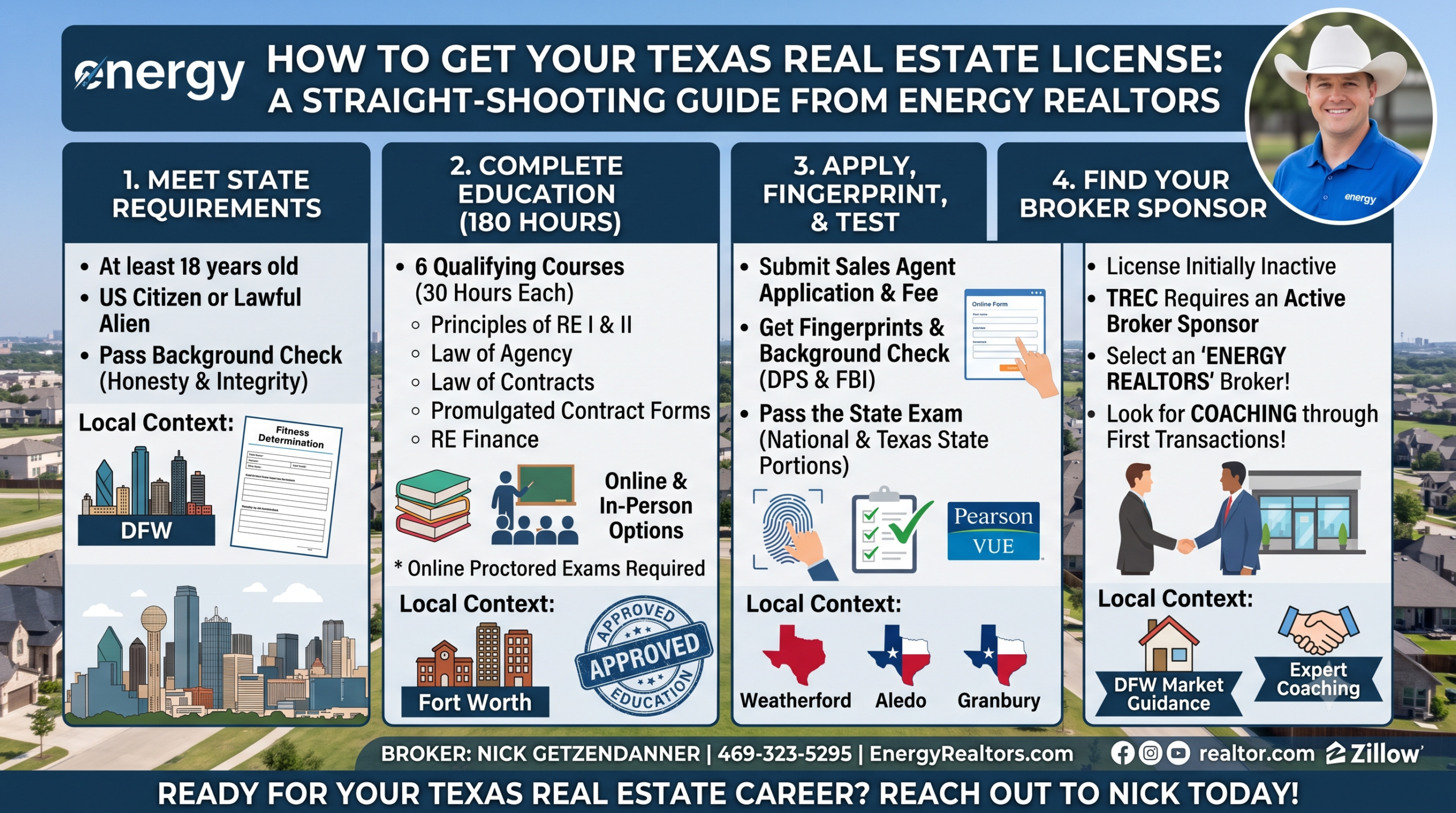
TREC sets clear compliance guardrails for who can hold a license. Before you invest in education, ensure you meet these baseline rules:
- Age & Citizenship: You must be at least 18 years old and a U.S. citizen or legally admitted alien.
- Honesty, Trustworthiness, and Integrity: Texas subjects all applicants to a background check and fingerprinting. If you have past felonies or misdemeanors, TREC requires a thorough review. Pro tip: If you have a questionable background, file a Fitness Determination with TREC before paying for classes to see if you qualify.
2. Knocking Out the 180 Hours of Education
Texas has one of the strictest educational requirements in the country. You must complete 180 classroom hours of qualifying pre-licensing education. This curriculum is broken down into six mandatory 30-hour courses:
| Required Course | Duration |
|---|---|
| Principles of Real Estate I | 30 Hours |
| Principles of Real Estate II | 30 Hours |
| Law of Agency | 30 Hours |
| Law of Contracts | 30 Hours |
| Promulgated Contract Forms | 30 Hours |
| Real Estate Finance | 30 Hours |
Where to Take Your Real Estate Classes
Choosing where to study depends heavily on your learning style. Here are three of the most popular, TREC-approved choices for Texas students:
- In-Person & Live Broadcast Learning:
Champions School of Real Estate
is a premier Texas provider. They offer physical campuses across major Texas cities alongside interactive virtual classrooms, making them excellent for hands-on learners who want structured accountability and live networking. - Flexible Online Learning:
AceableAgent
is highly popular for its modern, mobile-friendly platform. It allows busy self-starters to knock out hours comfortably via a smartphone or tablet app. - Comprehensive Digital Curriculum:
The CE Shop
delivers deep, direct online coursework designed to prepare you completely for practice, featuring excellent built-in exam prep tools.
Keep in mind: Regardless of your online provider, state regulations mandate that online programs require proctored online exams at the end of each course to verify your identity and ensure academic integrity.
3. The Application, Fingerprints, and State Exam
Once you hold those six course completion certificates, the logistical phase begins:
- File Your Application: Submit your Sales Agent application via the TREC online portal (REALM) and pay the state licensing fee.
- Submit Fingerprints: Schedule a fingerprinting appointment through the state’s vendor (IdentoGO) for your DPS and FBI background check.
- Conquer the State Exam: Once TREC approves your eligibility, you will schedule your exam through Pearson VUE. The test consists of a National portion and a Texas State portion. Lean heavily on exam prep materials—you get three attempts before TREC makes you retake additional coursework!
4. Moving From Inactive to Active: Finding a Broker Sponsor
Passing the state exam doesn’t automatically mean you can start selling houses. TREC will initially issue you an inactive license. To activate it and legally earn commissions, you must find a licensed Texas Real Estate Broker to sponsor you.
“Do not just look at commission splits when choosing a brokerage. Look for a broker who will actively coach you through your first few transactions.”
Real estate school teaches you the law; a good broker teaches you the actual business. You want a sponsor who understands the nuances of the local DFW market, helps you accurately draft complex addenda, accompanies you to your first listing presentations, and teaches you how to generate leads ethically.
Ready to Take the Next Step?
If you have questions about what a day in the life of a DFW agent really looks like, or if you’re looking for guidance on choosing the right path forward, don’t hesitate to reach out[cite: 1, 2]. Let’s sit down, talk strategy, and see if a career in Texas real estate is the right fit for your future goals.


Join The Discussion