
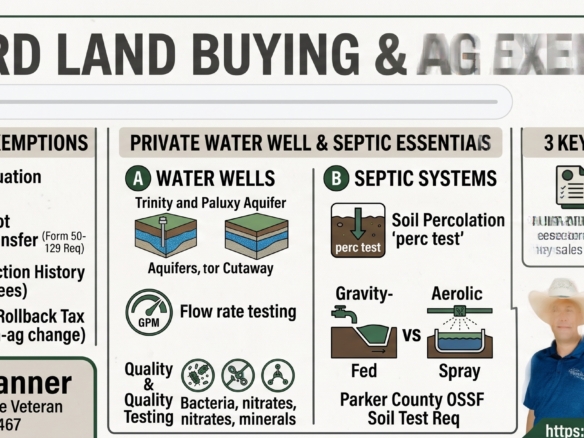
1. The Water Well: Flow Rate and Quality Matter
When you own a water well, you need to know two critical metrics: how much water it can pump per minute, and whether that water is safe for your family to drink.
- The GPM Test (Gallons Per Minute): A standard residential home requires a well that can consistently produce at least 3 to 5 GPM. During your option period, we bring in an expert well inspector to run a continuous flow test to ensure the well won’t run dry during peak household usage hours.
- Water Quality Analysis: Don’t just check the mechanics; check the chemistry. We always pull a water sample and send it to a local lab to test for total coliform bacteria, E. coli, nitrates, and heavy minerals. If a well requires a commercial filtration or water-softening system, you want to know that cost before closing.
2. The Septic System: Aerobic vs. Conventional
In Parker County, septic systems are heavily regulated by local environmental health offices. Depending on your soil profile, the property will either feature a conventional lateral line system or a modern aerobic spray system.
Aerobic systems act like a miniature wastewater treatment plant right on your property, using oxygen and chlorine to purify water before spraying it out through clear-water sprinkler heads. Because these systems have mechanical pumps and electronic control panels, they require regular maintenance contracts. A standard home inspection does not cover the inner workings of a septic tank—we always bring in a licensed wastewater professional to pump the tank, check the baffles, and ensure the system is fully compliant with modern county code guidelines.
3. The “Two-Acre” Infrastructure Rule
If you are looking at raw land tracts with plans to build your custom home down the road, pay very close attention to local platting laws. In many sections of Parker County, minimum acreage requirements exist to protect the local water table.
Generally, if a property relies on both a private water well and a private septic system, you need a minimum lot size to maintain proper legal separation distances between your septic spray field and your neighbor’s water source. Never buy a small parcel of unplatted land assuming you can simply install these systems without verifying local county density restrictions first.
The Strategic Insider Edge: Because our mid-2026 real estate landscape holds a healthy 5.8 months of housing supply, you do not have to skip these inspections to win a bid. We can write custom protective provisions directly into your contract, making your purchase contingent on satisfactory well and septic performance reviews.
Protecting Your Rural Investment
Buying land is an incredible wealth-building asset, but it requires a specialized set of boots on the ground. You need a broker who knows the difference between Trinity and Paluxy aquifers, and who can read a local soil topography map. Whether you’re searching for a turnkey home on five acres or a blank canvas to build your legacy, I’ve got your six. Let’s make sure your Texas dream is built on a solid foundation.



Join The Discussion